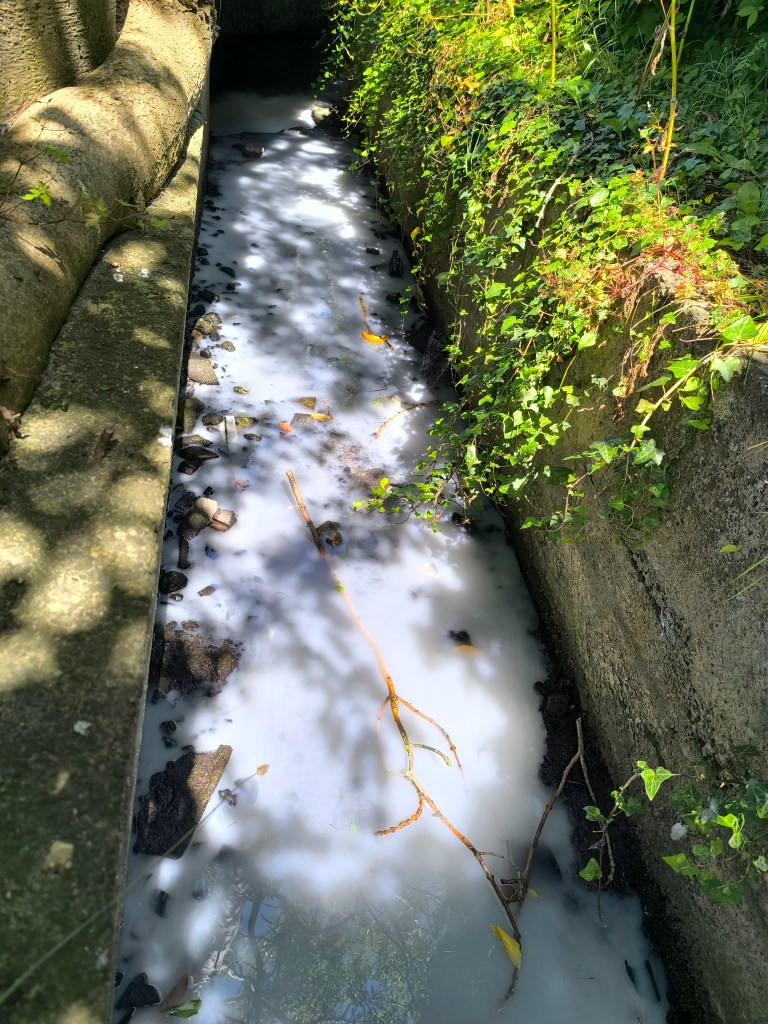
On 3rd July 2025, the Irish Independent published an article on local concerns about the river Poddle pollution affecting swans in Tymon Park, South Dublin. The concerns were first discussed during a local area committee in June 2025. During the meeting, a local councillor proposed a motion requesting South Dublin County Council to take immediate action to address a recurring localized pollution issue in Tymon Park North. Beyond the local incident, pollution events are widespread and ongoing throughout the river Poddle catchment. In response to the motion, the local authority produced a written report. In this short post, an assessment of the article, report and recorded committee discussions is used as a practical example to illustrate how to go about critical reading.
PROBLEM FRAMING: WHAT IS SAID ABOUT IT
This might seem obvious but is worth highlighting again and again: not everything that is said in newspapers, local authority reports or council meetings should be taken for granted. Room must always be kept for some critical thinking. In this post, we focus on one aspect of critical thinking, which is concerned with problem framing. When you hear something or read something that is about framing a problem and its solution, you always have to ask: how is the problem presented to me? How are causes described and responsibility distributed? And, most importantly: what is missing and how could have the problem been presented and described differently?
In the case we are looking at, the river Poddle pollution problem is always framed in terms of either industrial pollution (but remains marginal and industrial actors are never identified) or, much more systematically, residents’ misconduct. It’s mostly about some uninformed or malicious residents out there misconnecting their pipe or throwing some leftover paint down the drain. In short, the problem is framed in ways that make us, residents of the catchment, the main cause of the problem.
Another significant aspect of the pollution problem framing in the assessed material is that the problem is presented as very difficult to address: because the framing focuses on these localized, individualized, flash pollution incidents, the pollution issue is described at length as very difficult to resolve. As observed by the local authority representative attending the committee, “proving where that pollution is coming from can be quite a challenge in terms of the water network and how quickly it can wash through”.
In short, the river Poddle pollution problem is framed so as to make us think that:
1) residents of the catchment along with some businesses are the main pollution culprits.
2) the issue is very difficult to resolve.
PROBLEM FRAMING: WHAT IS NOT SAID ABOUT IT
Framing exclusively a problem in terms of individual behaviour and individual responsibility is a well-known strategy aiming at deflecting attention from institutional responsibility and system failures. Whenever you are told that individuals are the problem, your critical reading red light should go on. In the river Poddle pollution case, the responsibility of the local authority and of other state actors is never explicitly engaged, so what is left aside in their problem framing narrative? Based on years of research in the river Poddle catchment, three overlooked problem framing angles are briefly described in what follows.
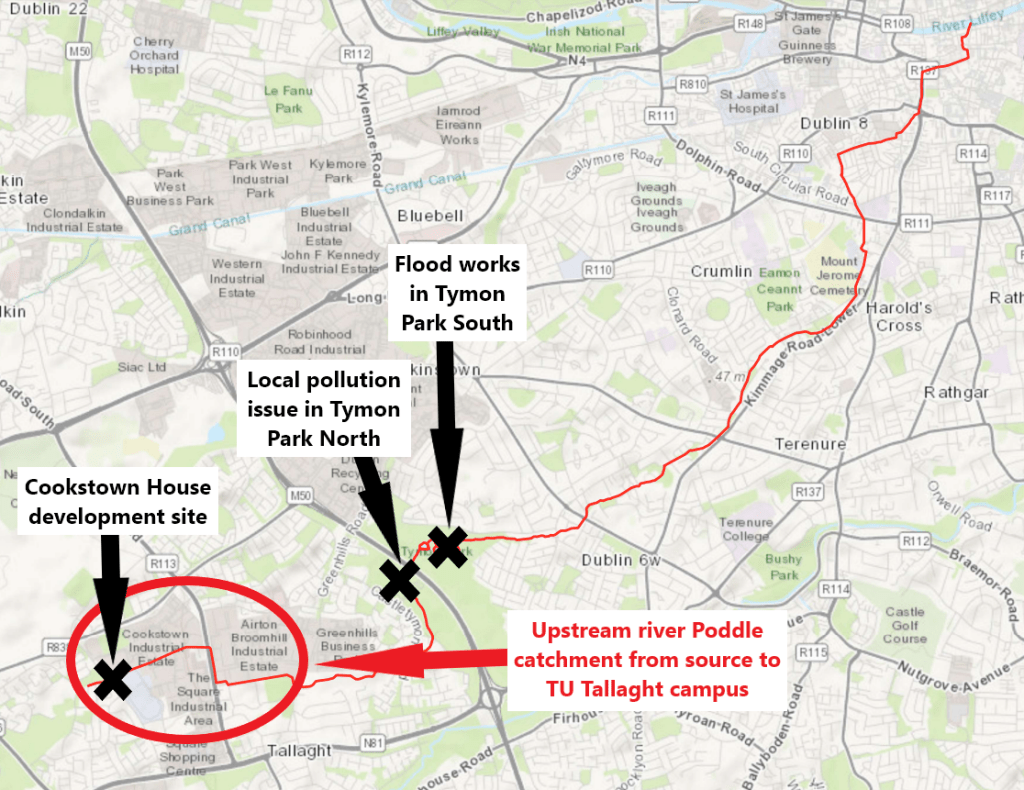
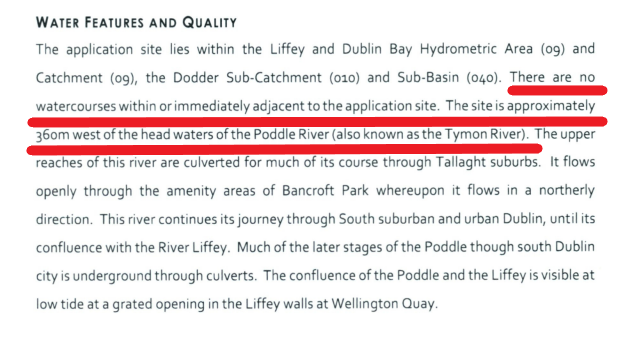
To begin with, the local authority and state agencies such as Irish Water have constantly mapped the upstream culvert of the river Poddle from its source down to the TU Tallaght campus as a “gravity surface water sewer” or similar, not as a river. What is more, they have constantly allowed developers to do the same (see Cookstown House development examples below and more examples in a previous post). Altogether, it means that, in this part of the catchment, the river is systematically overlooked in environmental assessments (and flood risk assessments!) and, for this reason, is also highly unlikely to be properly considered during development works. Returning to the 2024-approved Cookstown House development example, the river Poddle is wrongly mapped 360m away from the development site in the appropriate assessment (see appropriate assessment extract below) and not even mentioned once in the flood risk assessment.
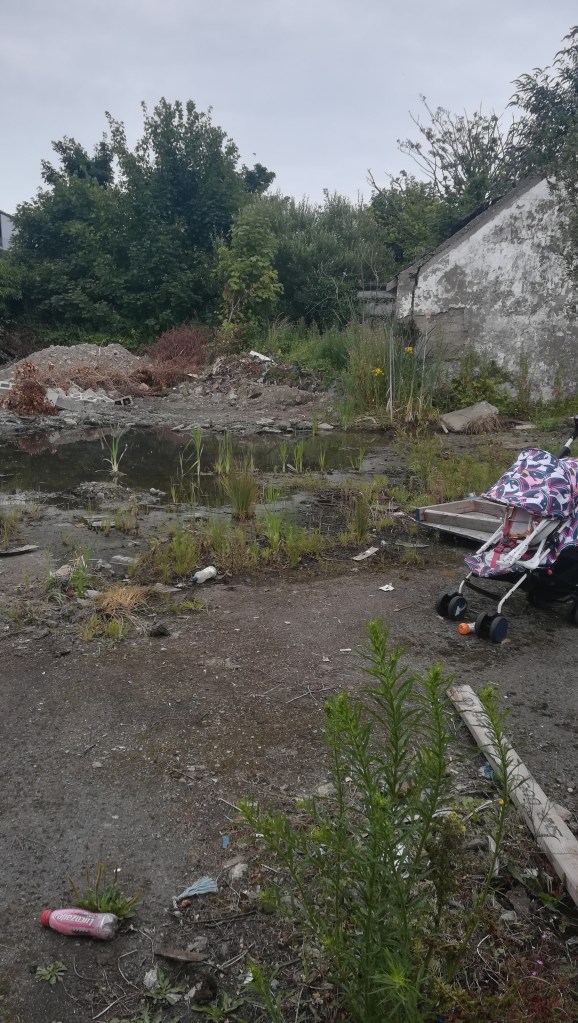
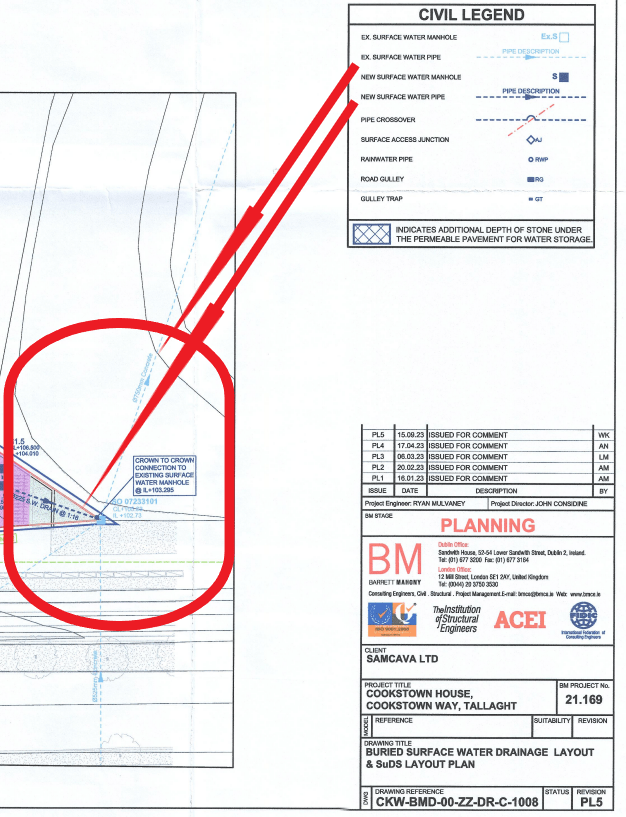
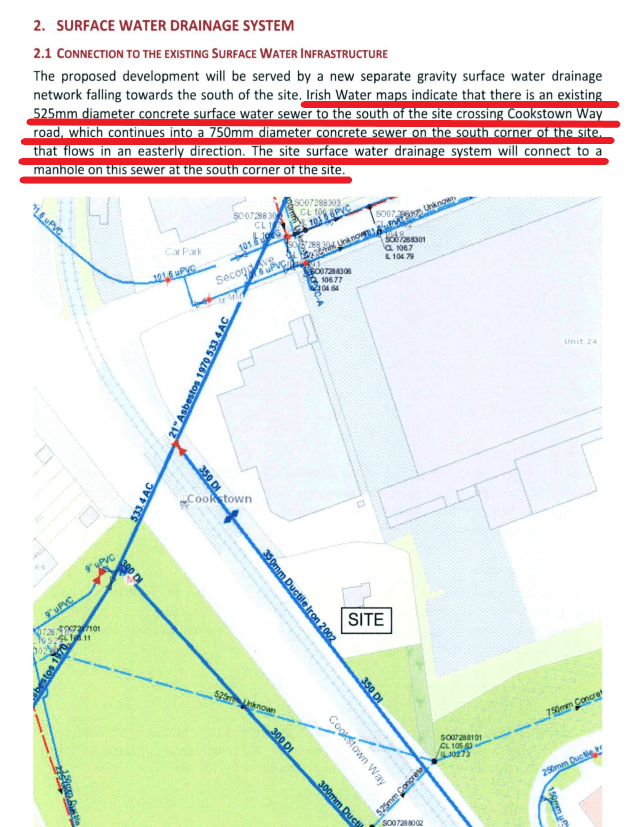
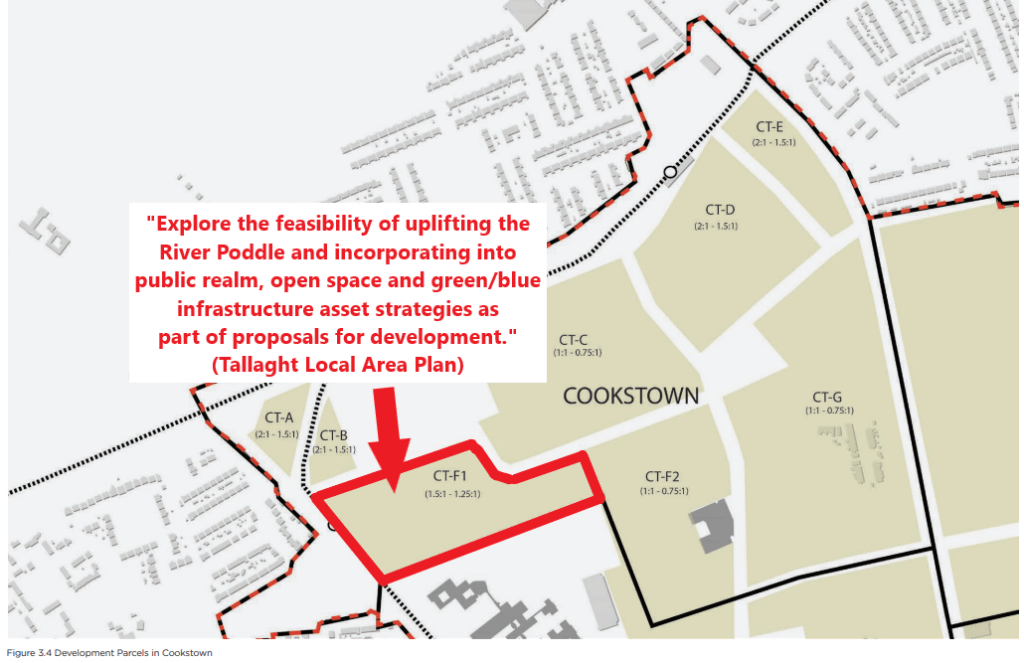
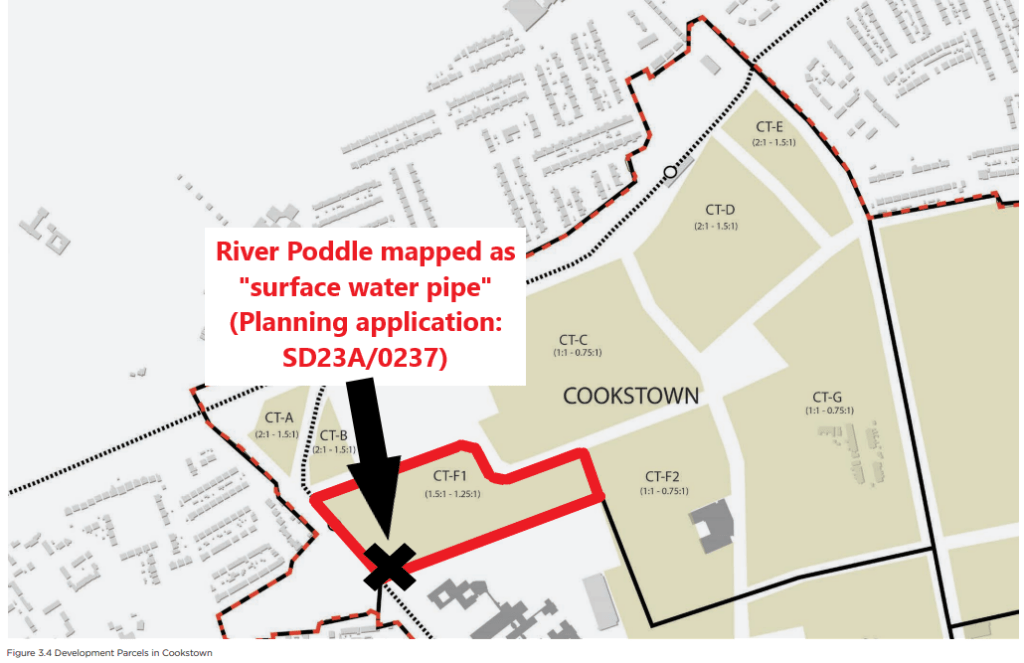
Second, the local authority has for now failed to engage with commitments made in the 2020-2026 Tallaght local area plan to daylight the river Poddle and its source in this upstream part of the catchment whenever possible. This is hardly surprising, however, given that they let developers map the river as a “surface water pipe” at locations where the daylighting is supposed to be discussed (see Cookstown House development example below). The uncovering of the river, in addition to multiple environmental benefits, would make it much easier for us to trace and prevent pollution incidents in a systematic manner.
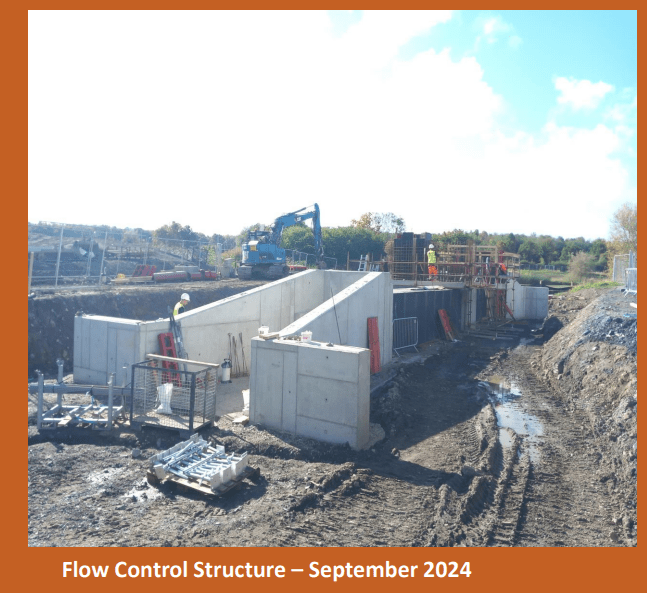
Finally, surprisingly, the heavy engineering conducted in Tymon Park in the last 12 months as part of the river Poddle flood alleviation scheme is never mentioned, as if it had never existed. Admittedly, it could be argued that it is because the works were actually conducted in the other Tymon Park lake which is located downstream of the polluted lake, but still, those heavy works have had not doubt a significant impact on the life, health and habits of the local wildlife and swan population. This is an important element of context which would have been more than relevant in discussions on the current health and wellbeing of the park’s wildlife.
PROBLEM FRAMING: WHY WHAT IS NOT SAID ABOUT IT MATTERS
Critically engaging with problem framing is not just good for its own sake. How you frame a problem in turn determines how you should attempt to solve it (see online articles by Max Liboiron, links below). In the case of the river Poddle pollution problem, it is suggested that identifying pollution sources, addressing misconnections and educating residents will cut it. However, it leaves unaddressed major institutional malpractices and system failures which, if properly engaged with, would have the potential to redefine urban river management in a much more significant way. Emphasizing aspects of a problem which are difficult if not impossible to resolve deflects attention from solutions that are right at hand. Examples of improvements that could be implemented in the short term may include: first, mapping rivers, including culverted rivers, as actual rivers; second, adhering to local development plan commitments. In addition to these short-term improvements, longer-term changes must also be debated as a matter of urgency, including centrally rethinking the strong involvement of private actors in the management of our urban rivers. Until now, based on years of research in the river Poddle catchment, private actors have always opted for profit over the health, safety and wellbeing of the catchment’s residents, human and non-human. There is no reason why they would do otherwise unless we force them to. In sum, without a reframing of the river Poddle pollution problem and its solutions that seriously engages with our many institutional malpractices and system failures, pollution in the river Poddle and its catchment will continue to flourish.
REFERENCES
“Against Awareness, For Scale: Garbage is Infrastructure, Not Behavior”, Max Liboiron
“Solutions to waste and the problem of scalar mismatches”, Max Liboiron
(Laure de Tymowski, August 2025)
 river-poddles.ie
2 thoughts on “Poddle pollution affecting swans in Tymon Park: a short introduction to critical reading”